Showing posts with label recipe. Show all posts

Wednesday, October 26, 2011

My Plate: Protien

Let's explore proteins. Remember, most of this information is taken from www.myplate.gov, so check it out to learn more.

PROTEIN: What foods are in the Protein Foods Group? All foods made from meat, poultry, seafood, beans and peas, eggs, processed soy products, nuts, and seeds are considered part of the Protein Foods Group. Beans and peas are also part of the Vegetable Group. For more information on beans and peas, see Beans and Peas Are Unique Foods.

Select a variety of protein foods to improve nutrient intake and health benefits, including at least 8 ounces of cooked seafood per week. Young children need less, depending on their age and calories needs. The advice to consume seafood does not apply to vegetarians. Vegetarian options in the Protein Foods Group include beans and peas, processed soy products, and nuts and seeds. Meat and poultry choices should be lean or low-fat.

Some commonly eaten choices in the Protein Foods Group, with selection tips, are:
  • Meat such as lean beef, pork, venison, bison, lamb (this includes ground meats, just be sure it is LEAN). Be sure to look at fat content, how the meat is prepared and recommended serving portions.
  • Poultry such as chicken, turkey and duck. Again, preparation is key. Duck is a higher fat meat than say, chicken breast. Darker poultry meat is higher in fat as well, that is why white chicken or turkey is the most recommended.
  • Nuts and seeds such as peanuts, almonds, sunflower seeds, pumpkin seeds. Following recommended serving is best and nuts in their natural state are better than roasted or salted nuts.
  • Seafood comes in several forms: fin fish, shell fish and canned. Salmon, tuna, trout, catfish are all examples of fin fish with salmon giving you the highest benefit. Shellfish are just that, fish with a shell. So things like crab, lobster, shrimp and crayfish. And then canned fish such as tuna, salmon, and anchovies. Again, grilled, not fried, cooking methods are best.
  • Eggs When eaten in moderation, no more than 2 every other day or so, eggs add a great protein to your diet. Prepared poached, hard boiled, soft boiled or fried (in olive oil or a lightly sprayed pan) and then paired with black beans, whole grain English muffin or fruit, eggs a delicious variation to meat.
  • Beans and Peas make a great substitution to meat and are great for vegetarian diets. Just remember to pair them with fruits and veggies. Black, pinto, kidney, and garbanzo beans are often found in CFA menu. Sometimes they are out in the open and other times they are within a dish adding a nice punch of protein. Did you know beans make a great thickener for soups and chilies as they give off starch?
As with most foods, protein is an essential part of your daily diet, but must be eaten in moderation and be low in fat.
Hummus

  • 2 cups canned garbanzo beans, drained
  • 1/3 cup tahini (sesame paste)
  • 1/4 cup lemon juice
  • 1 teaspoon salt
  • 2 cloves garlic
  • 2 T parsley
  • 1 tablespoon olive oil
  • 1 pinch paprika
In a food processor, blend the beans, tahini, lemon juice, garlic and parsley. Place in a serving dish and drizzle with olive oil, sprinkle with paprika and parsley, chopped.

This is a great recipe that can be enjoyed alone, as a dip (as shown) or a spread for various sandwiches.

Black Bean and Corn Salsa
  1. 1 can black beans, drained and rinsed
  2. 1 can sweet corn kernels, drained
  3. 1 tomato, chopped
  4. 1/4 C onion
  5. 1 jalapeno, seeded and chopped
  6. 1/2 bunch cilantro, rinsed and chopped
  7. 2 T line juice
  8. Garlic salt and pepper to taste
  9. 1 Avocado, chopped (optional)
Mix first 8 ingredients in a bowl, lightly toss. Chill until ready to serve. If adding avocado, add just before serving as it will brown. Serve with Baja Fish Tacos (found in Camp Kitchen Magic cookbook), with chips, Mexican dishes or how you prefer.

Eat well and be healthy. Remember to check out www.myplate.gov for more information.

In the Spirit of Camp,
Allison

Y182?

Join us for the Youth Empowerment / Ragger Retreat Dec 9-11, 2011

Wednesday, October 19, 2011

My Plate: Fruits

Let's explore fruits. Remember, most of this information is taken from www.myplate.gov, so check it out to learn more.

FRUITS
should complete the vegetable half of the plate, thus making your meal half filled with fruits and vegetables. Any fruit or 100% fruit juice counts as part of the Fruit Group. Fruits may be fresh, canned, frozen, or dried, and may be whole, cut-up, or pureed. Some commonly eaten fruits are apples, oranges, melon, berries, grapes, pineapple and more. Be cautious of those fruits that are high in sugar such as bananas and grapes. While healthy, they do add a large amount of sugar to your diet. Melons and berries are great, low sugar choices.

Check out the Fruit Gallery on the My Plate website to learn more about fruit size/amount and portion sizes.

Fresh Fruit Smoothie

Get out your cup/glass that you will use to drink your smoothie (a healthy choice is one that is about 8 ounces big). Fill it with a combination of your favorite fruits (see list below). If using yogurt, pour that in over the fruit, then pour in apple juice to just cover the fruit. Pour all into a blender. Blend until smooth. If too think, add a bit more apple juice. Pour back into your cup / glass and enjoy!
  • Strawberries, frozen
  • Peaches, frozen
  • Bananas
  • 1 drinkable yogurt, strawberry or strawberry banana (optional)
  • 100% Apple Juice
Other fruit options are kiwi, pineapple, melon, mango, papaya or any fruit you love. You can also add a bit of honey to sweeten.

Grilled Fruit

The next time your parents are grilling, ask them to grill some fruit as well. Great fruits are stone fruits such as peaches, plums, or nectarines and pineapple. For the stone fruit, cut in half, remove the stone (seed) and brush with olive oil. For pineapple, cut into 1 inch thick rounds and brush with olive oil. Place on grill, cut side down. Grill for 5 minutes and then flip. Grill for 5 more minutes. Goes great with fish, chicken, or drizzled with honey and served as dessert.

Another idea is to take stone fruit, pears, pineapple and cut into large chunks. Skewer making kabobs. Brush with oil and grill, turning every few minutes until heated, about 6 minutes. Brush with honey before serving.

Eat well and be healthy. Remember to check out www.myplate.gov for more information.

In the Spirit of Camp,
Allison

Y182?

Join us for the Youth Empowerment / Ragger Retreat Dec 9-11, 2011
Wednesday, October 12, 2011

My Plate: Vegetables

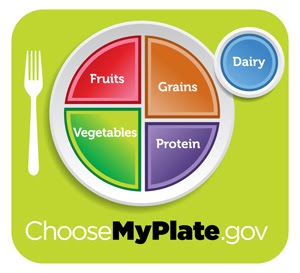
Let's explore vegetables. Remember, most of this information is taken from www.myplate.gov, so check it out to learn more.

VEGETABLES should take up a bit more than 1/4 of your plate. Now what type of vegetables should they be? According to the USDA any vegetable or 100% vegetable juice counts as a member of the Vegetable Group. Vegetables may be raw or cooked; fresh, frozen, canned, or dried/dehydrated; and may be whole, cut-up, or mashed.

Vegetables are organized into 5 subgroups, based on their nutrient content. Some commonly eaten vegetables in each subgroup are:
  1. Dark Green Veggies such as broccoli, spinach, or romaine lettuce and more. Note, iceberg lettuce, while a veggie, is so light in color that it doesn't add a lot of nutritive value to your diet.
  2. Red & orange vegetables such as tomatoes, carrots, squashed, sweet potatoes. Try tossing these in a little olive oil and roasting them. Delicious!
  3. Beans and Peas such as split peas, lentils, black beans, soy beans (edamame) and more
  4. Starchy Veggies such as potatoes, sweet peas, corn, lima beans and more. Try to avoid this category as much as possible as it does not add a lot to your diet. Stick with 1, 2, 3, and 5.
  5. Other veggies such as okra, asparagus, artichokes, and more.
Salad Hints: Avoid iceberg lettuce. Fill your salad bowl with dark green leaf lettuces like spring mix. I prefer "baby spring mix" as the leaves are tender. Add a few sliced almonds, cut up apple and dried cranberries for added taste and texture. and remember, when at a restaurant, ask for your dressing on the side, then try to use 1 T or less. A good way to do this is to add it in and thoroughly toss your salad to coat it well. Adding a dash of salt and pepper helps flavor your salad as well. Too much dressing can make your salad have a higher caloric count than a hamburger! So watch out.

What vegetables do you like? Are they dark in color? If not, how can your begin to change your eating habits? What new vegetable have your tried lately?

Here is a recipe for you to share with your family. It is easy and just might introduce you and your family to a new favorite.

Roasted Vegetables
  • 4 Carrots, peeled and cut into 2 inch lengths OR 2 cups baby carrots
  • 4 Parsnips, peeled and cut into 2 inch lengths
  • 1 Sweet Potato, cut to match the carrots
  • 1 Sweet Onion, cut into wedges OR 1 cup pearl onions
  • 3 Cloves Garlic, peeled (optional)
  • 4 Beets, peeled and quartered (if large) (optional)
  • 2 T olive oil
  • salt and pepper
Heat oven to 375 degrees. Prepare all veggies, pat dry if wet. In a dark roasting pan, toss veggies in oil, spread out evenly, add salt and pepper to taste (you can always add more). Place in oven. After 10 minutes, stir the veggies. Cook 10 more minutes. Check to see if they are lightly browned and tender. Cook until you feel they are tender to your liking.

If you do not want the beets to bleed red all over your other veggies, then wrap them in foil and place in oven next to pan. Roasting vegetables brings out the sweet, nutty taste. Delicious. Also try roasted asparagus, okra, broccoli and more.

Eat well and be healthy! Remember to check out www.myplate.gov for more information.

In the Spirit of Camp,
Allison

Y182?

Join us for the Youth Empowerment / Ragger Retreat Dec 9-11, 2011